SRT has developed a system to “virtually eliminate” turbo lag, dubbed “eBoost Air.” This system uses an electric supercharger to spool the turbos, providing immediate throttle response and boosting engine power.
The eBoost Air system is currently a prototype, but it’s expected to reach production and possibly debut in the Dodge Charger Sixpack.
How eBoost Air Works
The system aims to make turbocharged engines mimic the more responsive feel of a supercharged V-8, with Stellantis’ high-output Hurricane straight-six serving as the initial test bed.
To solve the problem of turbo lag, SRT mounted an electric supercharger upstream of the 3.0-liter inline-six’s traditional exhaust-fed turbochargers and integrated an electronically actuated bypass valve that functions like a throttle body.
When the driver presses the gas pedal off idle or at low RPMs, the supercharger immediately fills the turbos with positive pressure, improving both throttle response and acceleration.
Benefits of eBoost Air
The turbos revert to exhaust power at higher engine RPMs, but SRT claims this sustained boost across the rev range “virtually eliminates” turbo lag.
The concept is not new, as Mercedes-Benz and Volvo have used similar systems for years, which may be why SRT’s eBoost Air system came together quickly, going from an idea to a working prototype in just seven weeks.
In practice, this development could mean that drivers of vehicles equipped with the eBoost Air system will experience faster acceleration and more responsive handling, which could be particularly beneficial for drivers who frequently drive in stop-and-go traffic or need to quickly merge onto highways.
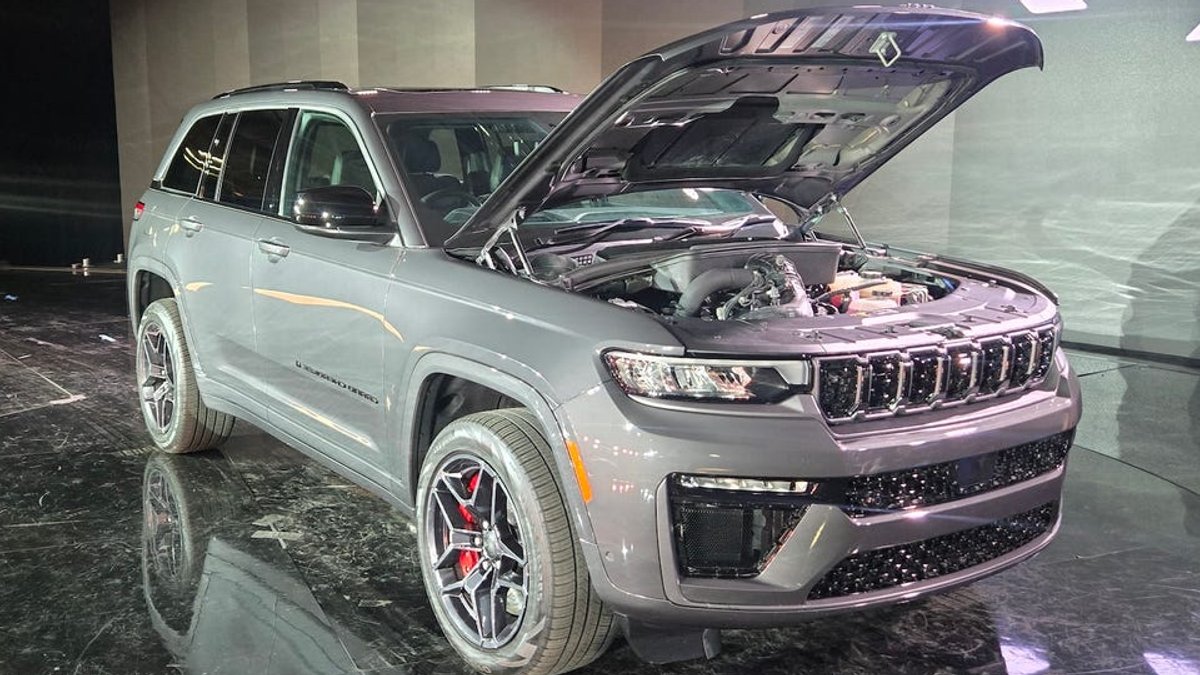
The team also managed to install a version of the Dodge Charger’s high-output Hurricane engine into a Jeep Grand Cherokee, which features a carbon-fiber, cowl-induction hood.
Beneath it is a prominent airbox that feeds the engine’s intake system, and the prototype eBoost Air system helped generate 90 horsepower, which suggests the 550-hp engine now makes 640 ponies.
Future of eBoost Air
While no one on the SRT team would confirm when the eBoost Air system might make its way into a production vehicle, it’s likely that the system will be used in future models, possibly starting with the Dodge Charger Sixpack.
According to the report, the SRT team has been working on new ways to make vehicles more powerful and move quicker, and the eBoost Air system is one of the results of these efforts.
The turbocharger technology has been around for decades, but the eBoost Air system represents a significant improvement in terms of reducing turbo lag and increasing engine power.
Stellantis is already testing the eBoost Air system on the Dodge Charger Sixpack.


