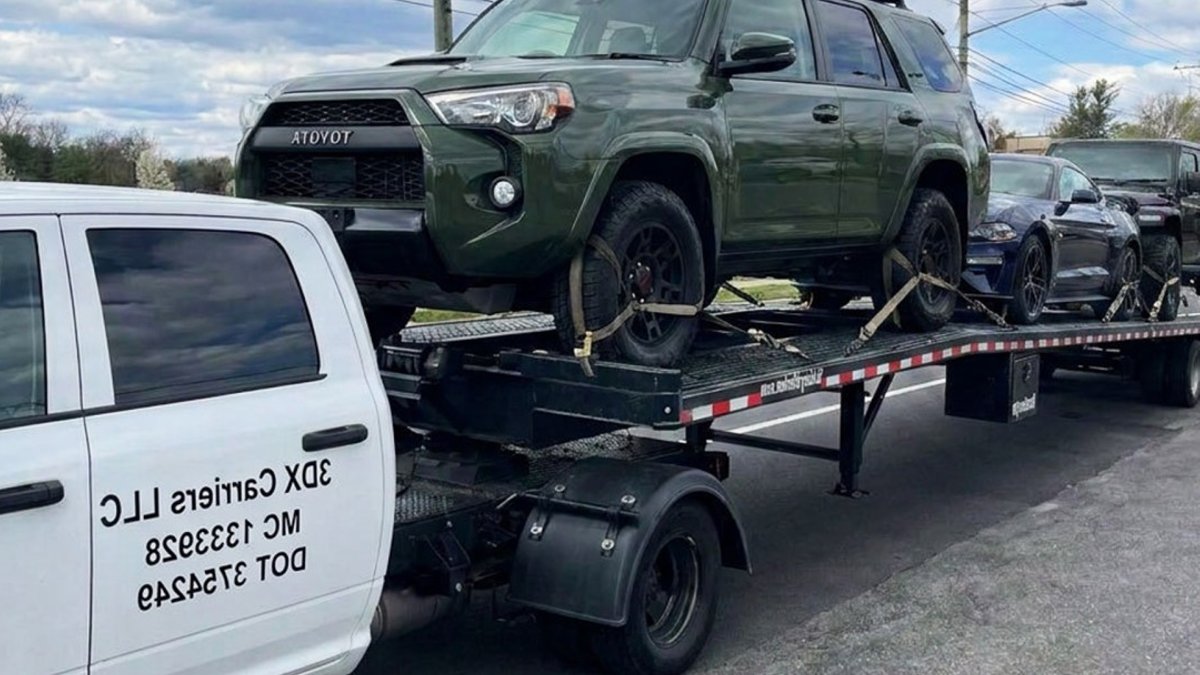
A sophisticated AI-driven scam has emerged on Facebook Marketplace, tricking even a Tier 1 auto lender into financing a non-existent vehicle. Wil Matthews, a professional photographer, fell victim to this scheme when he purchased a Toyota 4Runner for $36,000, only to discover the car never existed.
The scam involved a cloned dealership, Route 519 Motor, which appeared legitimate with fake window stickers, purchase orders, and a dealer license certificate. Matthews, who had vetted the listing and arranged financing through a major credit firm, was further deceived by a spoofed GPS tracking portal that showed the vehicle en route from Texas to his home in California.
How the Scam Unfolded
The scammers went to great lengths to appear credible. They provided Matthews with a live GPS tracking link and sent a photo of the supposed car on a transport trailer, complete with a vinyl decal bearing motor carrier and DOT numbers. However, these numbers were later found to belong to a different company, V&S Group, linked to fraudulent addresses in Wyoming.
Further investigation revealed that the phony dealer’s Facebook account was created and managed by a user in Moldova, working with a domestic shell company in Tennessee. They also used a VoIP phone switchboard and a voice synthesizer to obscure their identities, making the scheme nearly undetectable.
Despite the elaborate deception, Matthews managed to escape financial liability by invoking the FTC Holder Rule, which transferred responsibility to the lender. The bank ultimately waived the loan, allowing him to exit the contract.
Related Post: Mini Cooper EV may switch to rear-wheel drive
The Broader Threat of AI Scams
This incident highlights a growing trend of AI-assisted scams on online marketplaces. Matthews has identified numerous fake listings, often boosted by paid promotions to reach more potential victims. The scammers’ ability to replicate legitimate dealerships and manipulate digital tools shows the difficulty consumers face in verifying transactions.
Unlike traditional scams, these schemes exploit advanced technology to create convincing facades. For instance, the VIN of the fake Toyota 4Runner appeared legitimate when searched online, further misleading both Matthews and the lender. This level of complexity makes it difficult for even cautious buyers to detect fraud.
The case also raises concerns about the role of platforms like Facebook Marketplace in preventing such scams. With billions of dollars in transactions occurring on the platform, the lack of robust moderation tools leaves consumers vulnerable. Meta, which owns Facebook, is already under pressure to address AI misuse and deepfakes across its platforms, but the problem persists.
As scams like these become more prevalent, consumers must remain vigilant. Matthews’ experience serves as a cautionary tale, demonstrating that even those with a trained eye can be deceived. The ease with which scammers can replicate legitimate businesses and manipulate digital tools suggests that such schemes will only become more common, posing a significant risk to online shoppers.
The FTC advises buyers to thoroughly research sellers, verify vehicle histories, and avoid transactions that require upfront payments without physical inspection. However, as this case shows, even these precautions may not always be enough.
Read Also: GM’s new V8s outpower Ford and Ram in naturally aspirated
The scammers’ use of a shell company and VoIP technology highlights the difficulty of tracing such fraud. Matthews’ discovery of the fake addresses tied to V&S Group and the involvement of a Moldovan user further complicates efforts to hold perpetrators accountable.
Scammers’ Tactics and Platform Vulnerabilities
Scammers create numerous fake listings, often boosting them with paid promotions to increase visibility. They target popular vehicles, but the exact selection criteria remain unclear. Facebook’s algorithm may inadvertently promote these fraudulent listings, exposing more users to potential scams.
The Role of Technology in Scam Execution
The scammers leveraged advanced technology to execute the fraud. A VoIP phone switchboard allowed them to answer calls from any device with an internet connection, making it difficult to trace their location. Additionally, the delivery driver’s voice was altered using a computer-synthesized voice, further obscuring their identities.
The involvement of a Moldovan user in managing the phony dealer’s Facebook account highlights the international scope of these scams. This user worked with a domestic shell company in Tennessee, demonstrating the complexity of the operation and the challenges in tracking down the perpetrators.
Implications for Online Marketplaces
The prevalence of such scams on Facebook Marketplace raises concerns about the platform’s ability to protect users. Meta, the parent company of Facebook, is already under scrutiny for its handling of AI misuse and deepfakes, but the problem persists.


