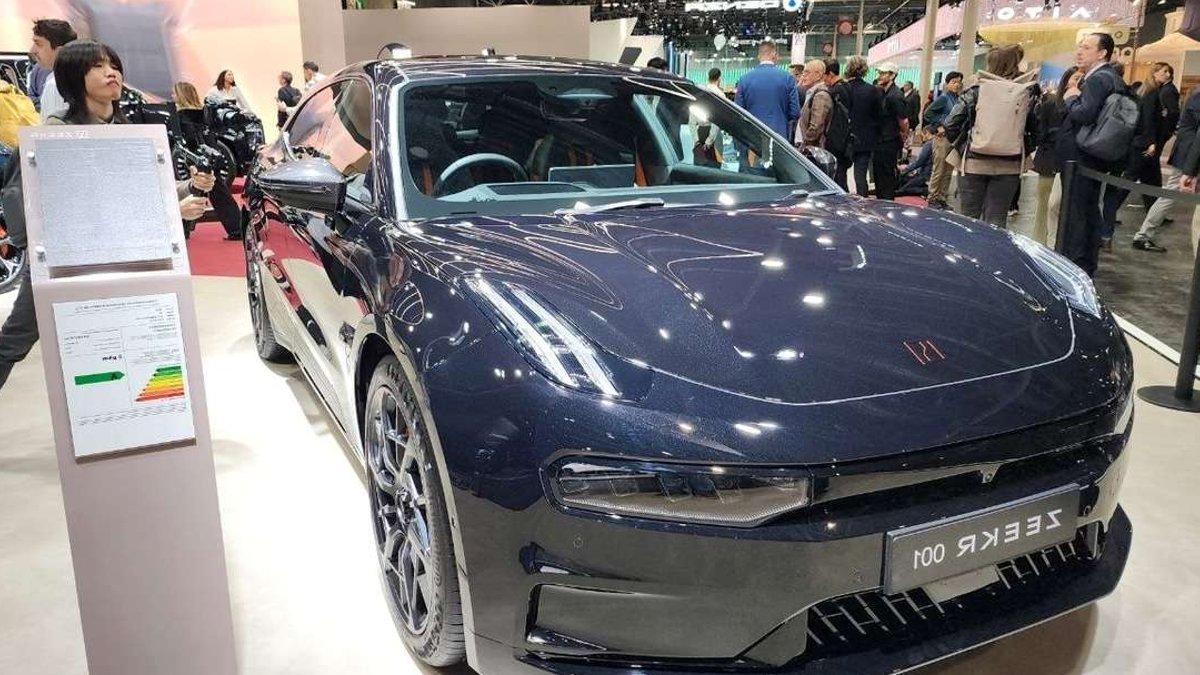
The sheer number of booths dwarfed the presence of any single foreign automaker, and the exhibition floor buzzed with the latest electric-vehicle concepts from the East.
Three-pronged plan to win European buyers
Analysts noted that the rapid climb reflects coordinated investment in product design, battery technology, and local partnerships.
The strategy rests on three pillars: lower prices through scale, ultra-fast charging to allay range anxiety, and premium models intended to reshape perceptions of Chinese engineering.
Affordability is illustrated by Leapmotor. Its B10 compact SUV is now built at Stellantis’ Zaragoza plant, bypassing tariffs, and the smaller A05 debuted as part of an “in Europe, for Europe” approach. By assembling the vehicle within the EU, the maker cuts shipping costs and avoids import duties, allowing the price to sit closer to that of established domestic rivals.
On speed, BYD unveiled the Atto 8 SUV, promising to lift a 115 kWh battery from 10 percent to 70 percent in five minutes and to 97 percent in nine. The company also announced a plan for 3,000 flash-charging stations across Europe by the end of 2027. This network is intended to reduce the time drivers spend at chargers, a factor that has frequently been cited as a barrier to wider EV adoption.
Premium ambitions are embodied by Geely’s Zeekr and BYD’s Denza. The Zeekr 9X SUV and the Denza Z9GT shooting-back and D9 luxury van aim to compete with German marques, with test drivers noting the Zeekr’s cabin quietness and lane-centering rival German hot-hatches. Reviewers highlighted the refined interiors and advanced driver-assist features that bring these models into the same conversation as long-standing luxury brands.
Compared with earlier attempts by Chinese firms to copy Western designs, this multi-angle push mirrors BYD’s 2022 success in overtaking Tesla in more than twenty markets, showing how coordinated product and infrastructure roll-outs can alter market conditions. The experience demonstrated that a blend of competitive pricing, rapid-charge capability, and premium branding can reshape consumer expectations.
Despite these advances, brand awareness remains low. Market surveys indicate that many potential buyers have yet to encounter the newer marques, showing the importance of localized marketing campaigns.
Europe’s micro-car counter-move
AIXAM displayed its tiny city cars, while smart introduced the two-seat #2, priced near €20,000. Both manufacturers emphasized that the reduced footprint translates into lower registration fees and easier parking in dense urban cores.
Regulatory pressure also shapes the field. Since October 2024, extra EU duties ranging from 7.8 to 35.3 percent have been levied on Chinese-built EVs, and the draft Industrial Accelerator Act would tie public incentives to at least 70 percent EU-sourced components. These measures aim to protect domestic suppliers while encouraging manufacturers to source more parts locally.
Heritage models and micro-mobility focus
One French brand displayed its electric Twingo E Tech alongside revived versions of the classic 5 and 4, emphasizing a design lineage that spans decades. The exhibition stand showcased how the brand has modernized its heritage while retaining recognizable styling cues.
Another automaker presented a compact city car that already sells in limited markets, noting its ability to travel through narrow streets and restricted zones without penalty.
Italian engineering also featured a two-seat electric quadricycle that targets urban commuters seeking affordability and maneuverability. The model is slated for market entry in the later part of the decade, aligning with the brand’s strategy to broaden its electric portfolio. Its lightweight construction and modest power output make it well suited for short-range trips within city limits.
Both exhibitors argued that domestic production reduces logistics costs, allowing price competitiveness without relying on overseas freight. Local assembly also supports regional employment, a point repeatedly raised during press interviews. Plant managers highlighted that the new lines have created hundreds of jobs in areas that previously faced industrial decline.
Industry insiders observed that these micro-vehicles fit within city-specific regulations that discourage larger, higher-emission cars. By complying with low-emission zones, they avoid additional fees that burden traditional SUVs.
Analyst warns of Chinese push and U.S. regulatory obstacles
Fiat is extending its micromobility portfolio with the Topolino and the upcoming Multiplina quadricycle. The Multiplina, a four-seat electric heavy quadricycle, is slated for sale in 2028.
Analysts note that Chinese factories are operating well beyond domestic demand, resulting in excess inventory shipped abroad at reduced margins.


