Australia’s road toll has climbed in recent years, with 1,300 fatalities recorded in 2025—a figure that has held steady despite long-term safety improvements. The issue lies not in a shortage of solutions but in misplaced priorities. Nearly two-thirds of road deaths now occur in regional and remote areas, where driving conditions differ drastically from urban environments. These roads often feature undivided lanes, longer emergency response times, and hazards such as wildlife collisions and poor visibility. Yet safety discussions frequently treat all risks as equally urgent, failing to concentrate on the most impactful strategies.
Historical data reveals the scale of progress, and the need for renewed focus. In 1970, 3,800 Australians died on roads, more than double today’s toll despite a far smaller population. It was only in the 1980s that we began to tame that wild trend, after decades of relentless increases. Through a combination of safer vehicles, improved roads, legislation, enforcement, and changes in driver behavior, fatalities have been reduced to about a third of that peak, even as the population and number of vehicles have grown significantly.
These improvements have likely averted over 200,000 deaths in the past five decades. However, recent years have seen stagnation, and the geographic disparity in fatalities demands a more precise approach. The age-standardised rate of potentially avoidable deaths in very remote Australia is almost three times that in major cities, highlighting how rural risks persist despite urban progress.
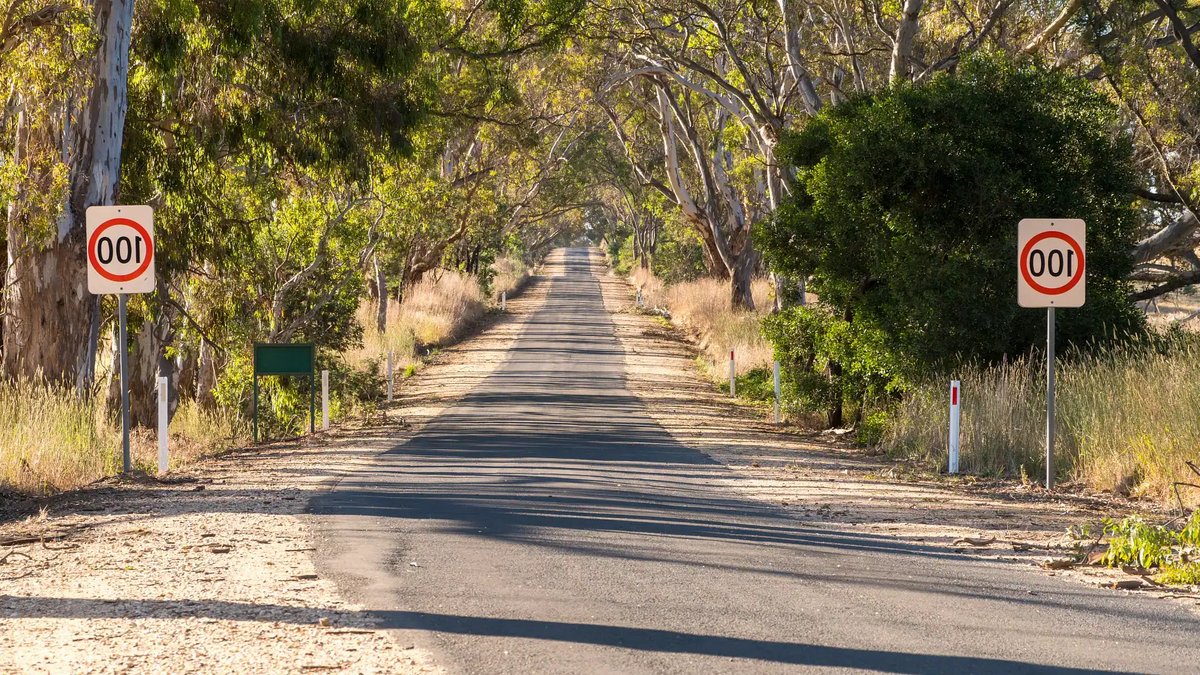
One of the most effective yet underused strategies involves adjusting rural speed limits. Current limits, often set at 100 km/h, apply uniformly across roads with vastly different safety profiles. Narrow, undivided roads with limited shoulders and poor visibility present far greater dangers than wider, divided highways. Reducing the default speed limit for these high-risk routes could yield significant gains without requiring extensive infrastructure overhauls. Lowering the limit further on lower-standard roads warrants serious consideration. Higher limits could remain signposted where the road’s design and safety features justify them. Existing signposted limits on unsuitable roads would also need review.
In 2003, the state lowered speed limits from 110 km/h to 100 km/h on 1,100 kilometers of rural arterial roads. A decade-long analysis found that fatal crashes on these roads fell by 27.4% compared to control roads where limits remained unchanged. The study did not examine further reductions. Lower limits would also need better enforcement, and that is not simply a shortage of cameras. It also concerns where and how they are used.


