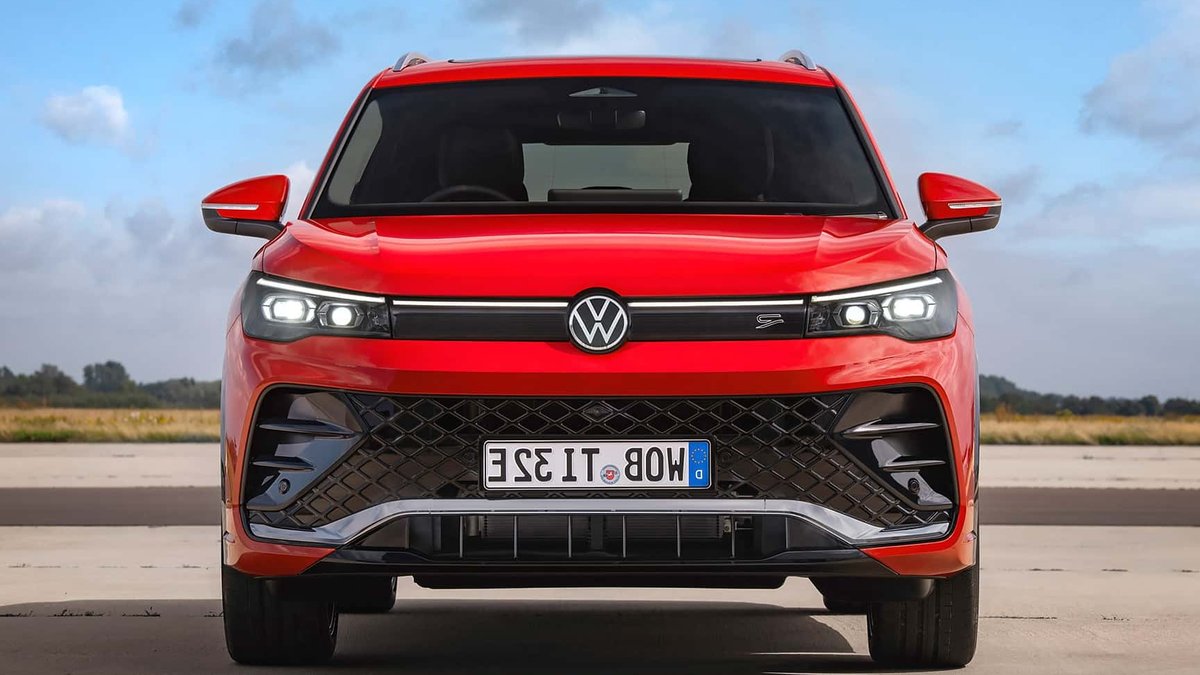
The Volkswagen Tiguan plug-in hybrid (PHEV) was Europe’s best-selling model in its category in 2023, a position it held for much of the year due to strong demand for electrified SUVs. Its decline to fourth place in 2024 reflects a broader shift in the market, where Chinese automakers have rapidly gained ground. The Tiguan PHEV’s fall from the top spot was not gradual but abrupt, occurring within months as Chinese brands introduced competitive alternatives with aggressive pricing.
Volkswagen Group CEO Oliver Blume’s call for higher EU tariffs on Chinese PHEVs was delivered with unusual urgency during the company’s first-half earnings presentation. His remarks were framed as a plea for immediate action, not just a policy suggestion. Volkswagen is demanding that the European Union impose higher import tariffs for Chinese plug-in hybrids, and it wants it done sooner rather than later. Blume’s comments came as the company proposed job cuts that could affect 100,000 employees, up from the 50,000 layoffs that have already been approved.
Chinese brands dominate Europe’s PHEV market
The BYD Seal U, BYD Atto 2, and Jaecoo 7 have displaced the Volkswagen Tiguan PHEV in Europe’s sales charts. After the first half of the year, the three best-selling PHEVs in Europe were Chinese. The BYD Seal U is now the leader, followed by the BYD Atto 2 and the Jaecoo 7. Meanwhile, the Volkswagen Tiguan, which was at the top of the list last year, is now in fourth position, according to Dataforce figures quoted by Automotive News.
The 28.3% market share held by Chinese brands in Europe’s PHEV segment reflects a shift in the competitive setting. Chinese automakers benefit from vertically integrated production, controlling everything from battery cell manufacturing to final assembly. This integration reduces costs and allows for faster innovation cycles. The rapid growth of Chinese brands in Europe, with sales nearly doubling to 686,000 units in a single year, also highlights their ability to scale quickly.
Volkswagen’s response to this competition has been twofold: cost-cutting and lobbying for trade protections. The company’s decision to approve 50,000 job cuts, followed by a proposal for an additional 50,000, is part of a broader restructuring plan aimed at reducing overhead. These cuts extend to administrative and engineering roles, reflecting a need to streamline operations. The job reductions are also a sign of Volkswagen’s urgency to reinvest savings into electrification and software development.
EU tariffs already target Chinese EVs
The EU’s existing tariffs on Chinese electric vehicles (EVs) were introduced after an investigation concluded that some manufacturers had received excessive state subsidies, allowing them to undercut European prices. These tariffs, which can add up to 35% to the cost of imported Chinese EVs, were designed to level the playing field but have had mixed results. The potential extension of tariffs to plug-in hybrids is a contentious issue within the EU.
Unlike fully electric vehicles, PHEVs occupy a transitional role in the market, appealing to consumers who are not yet ready to commit to full electrification. European automakers have relied on PHEVs to meet increasingly stringent emissions regulations, particularly in markets where charging infrastructure remains underdeveloped. Chinese brands, however, have entered this segment with models that offer longer electric ranges and lower prices, putting pressure on European manufacturers.
Blume’s argument that European automakers are at a disadvantage in the PHEV segment centers on regulatory inconsistencies. While battery-electric vehicles (BEVs) are subject to clear incentives and emissions standards, PHEVs operate under a different set of rules. The current framework allows Chinese PHEVs to qualify for the same subsidies and tax benefits as European models, despite their lower production costs. This discrepancy has created a situation where Chinese brands can offer PHEVs at prices that European manufacturers cannot match without sacrificing profitability.
The upcoming emissions rules, set to take effect in the coming years, will require automakers to further reduce their fleet-wide CO₂ output. European manufacturers have traditionally used PHEVs to offset emissions from their internal combustion engine (ICE) vehicles. However, the lower prices of Chinese PHEVs threaten to disrupt this strategy. If European automakers cannot sell PHEVs at competitive prices, they may struggle to meet emissions targets, potentially leading to fines or forced reductions in ICE vehicle sales.
The EU’s consideration of additional tariffs on Chinese PHEVs reflects a broader debate about protectionism versus free trade. While tariffs may provide short-term relief for European automakers, they could also provoke retaliatory measures from China, affecting European exports in other industries. Additionally, tariffs risk alienating consumers who benefit from lower-priced Chinese vehicles. For Volkswagen, the speed of the EU’s decision is critical, as further delays could allow Chinese brands to solidify their dominance in the PHEV segment.
In Massachusetts, electric vehicle owners can now earn money by selling stored battery power back to the grid, a model that could influence how automakers approach energy management in other regions. This vehicle-to-grid (V2G) technology allows EV batteries to function as temporary energy storage units, providing power during peak demand periods. While the program is currently limited to Massachusetts, it highlights the growing potential for EVs to play a role in energy markets beyond transportation.


