A single overlooked detail could cost electric vehicle (EV) buyers thousands. It’s called TOPS, Trillions of Operations Per Second, a measure of an EV’s ability to handle the data demands of advanced driver-assistance systems (ADAS), self-driving, and self-parking features.
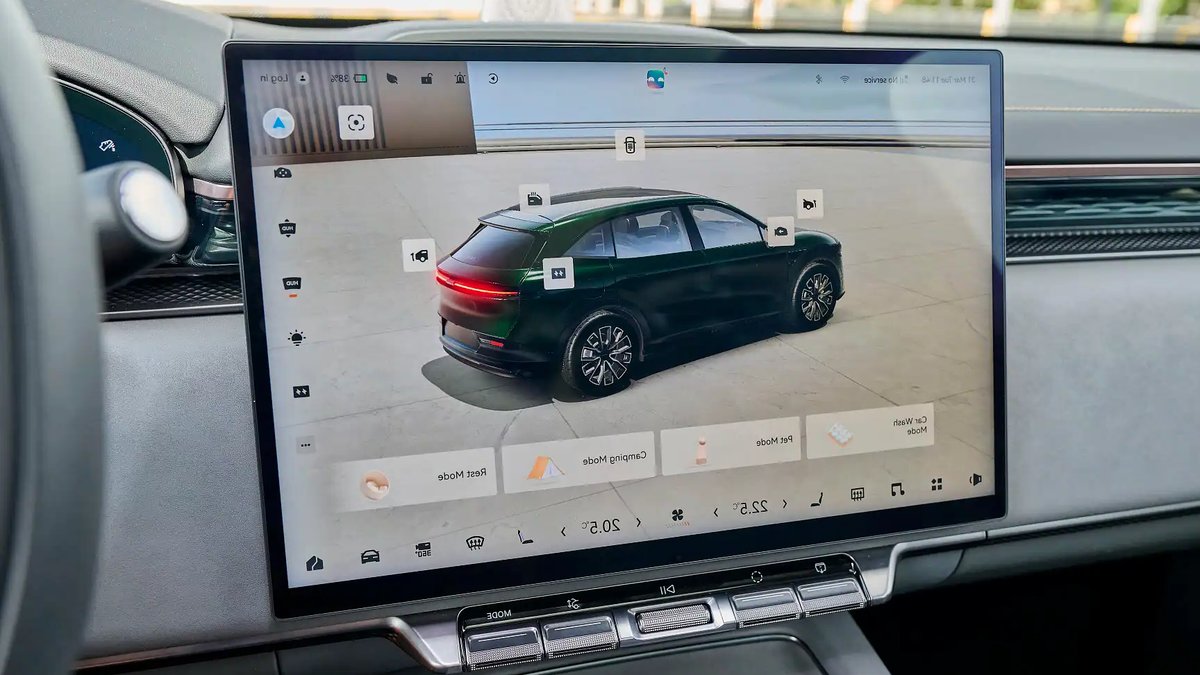
Not all EVs are created equal. Take the Zeekr 7X as an example. Owners have criticized its basic ADAS functions, like poor lane-keeping and rudimentary adaptive cruise control. The issue? Australian models use an older Mobileye processor, while Chinese versions feature a more advanced Nvidia Orin-X chipset.
The TOPS Gap: A 23x Difference
The Australian Zeekr 7X maxes out at around 22 TOPS, while its Chinese counterpart reaches 508 TOPS, a 23x difference. This gap means the Chinese model can run features like LiDAR detectors and the full Haohan safety suite, which the Australian version cannot support.
Zeekr is addressing this disparity. The new 7GT wagon uses an export version of the Nvidia Orin-X chipset, offering 254 TOPS. This upgrade is expected in the 2027 model of the 7X.
The Rising Importance of TOPS
As processing demands increase, a future-proof chipset is becoming a critical buying factor for EV owners. Chinese manufacturers typically need around 250 TOPS for basic automation and roughly 2,500 TOPS for supervised self-driving.
XPeng, a leader in this technology, is testing its VLA2 supervised self-driving system in Australia. Its new L03 Ultra model features three in-house Turing AI chips, delivering a total of 2,250 TOPS.
Tesla, long a pioneer in semi-autonomous driving, has steadily increased its processing power. Its Hardware 1 managed just 0.256 TOPS in 2014, while the upcoming Hardware 5 is projected to reach 2,000 to 2,500 TOPS. For context, neuroscientists estimate the human brain can handle around 1,000 TOPS.
The Polestar 3 recently saw its processor power increase by a factor of eight compared to its predecessor, ensuring it remains competitive for years to come.
TOPS and Residual Value
Processing power, measured in TOPS, is becoming a key factor in maintaining an EV’s residual value. This is because buyers often prioritize early-adopter technology when choosing an EV.


